
Data Centers
Data Centers: Best Practices for Local Government
Bob Staedler’s eight-part series on how cities and counties can set clear standards for data centers, from backup generators and noise to fire protection and what happens when a facility closes.
Each article draws on rules other communities have already adopted, and each one links to the ordinance or study behind it.
The series
Eight articles, publishing every other day through Nov. 14
What it covers
Seven areas local data center standards should address
The sources
Adopted rules from Fairfax County, Va., Aurora, Ill., and Jefferson County, Mo., plus Washington State’s Quincy air studies
The author
Bob Staedler, Principal of Silicon Valley Synergy
The series
Read the Series
The articles are published on The Synergy Report, Bob’s news and analysis site.
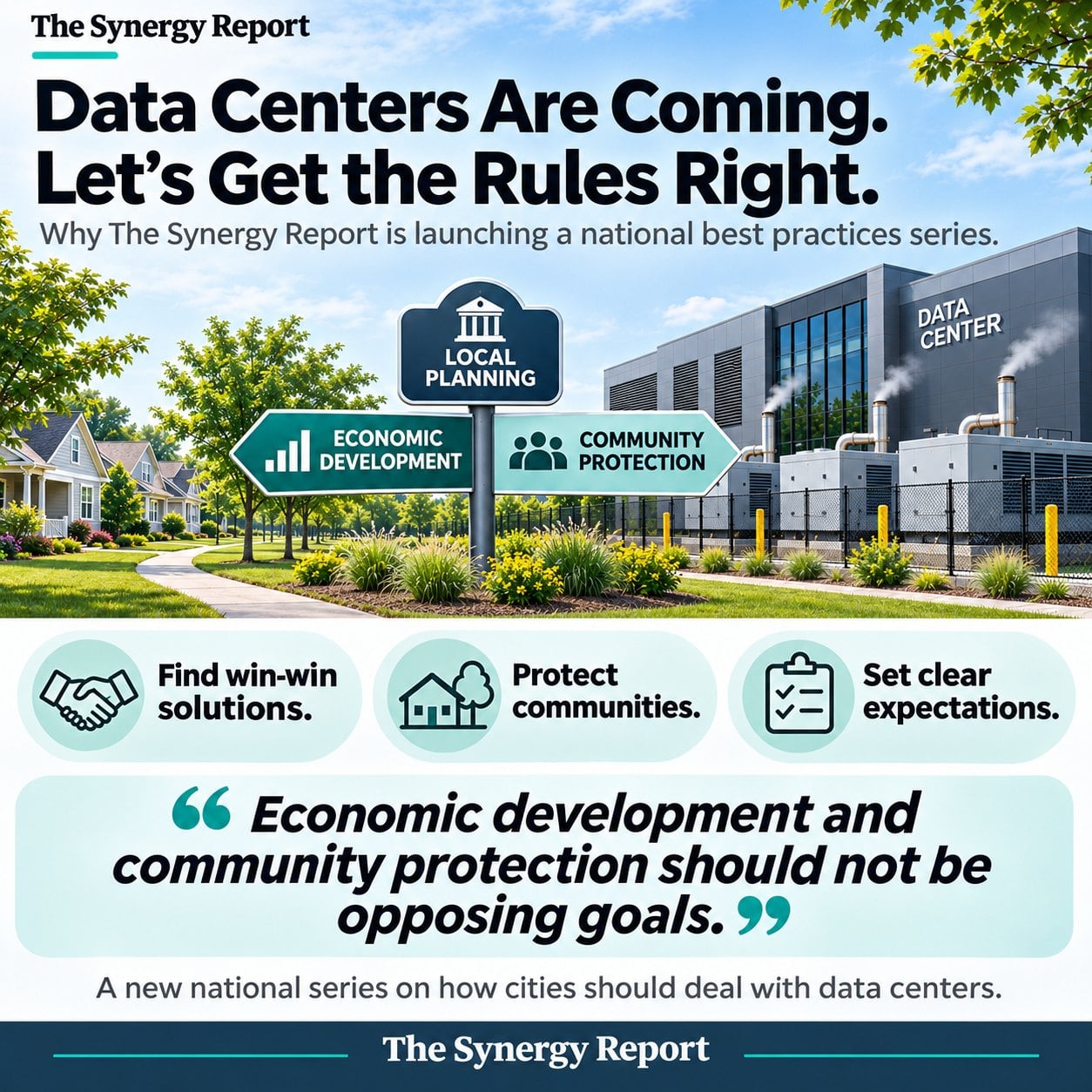 Start here · Nov. 2Data Centers Are Coming. Let’s Get the Rules Right.Why The Synergy Report is launching a national best practices series on data center development.Read the introduction →
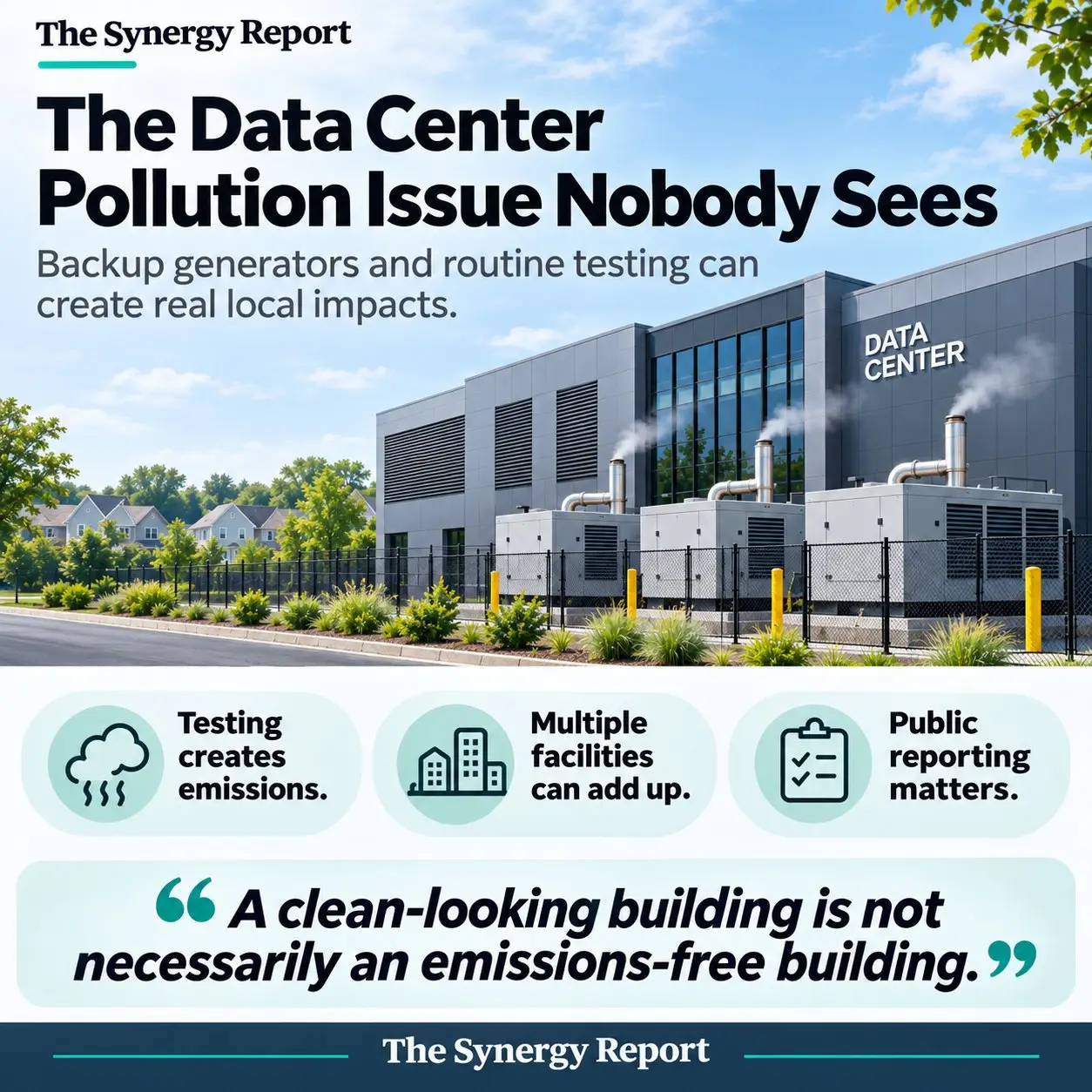 Latest · Nov. 4The Data Center Pollution Problem Nobody Sees Every DayData centers are often described as relatively clean industrial facilities. But behind many of these buildings is a substantial amount of equipment that deserves closer attention: emergency backup generators.Read the article →
- 01
Fire protection & emergency response · Nov. 2
Data Centers Promise Tax Revenue. What Do They Cost Fire Departments?
When a city considers a major data center development, public discussion often focuses on construction investment, property taxes, and other anticipated revenues.
- 02
Backup generators & air quality · Nov. 4
The Data Center Pollution Problem Nobody Sees Every Day
Behind many of these buildings is a substantial amount of equipment that deserves closer attention: emergency backup generators.
- 03
Setbacks & neighborhood compatibility · Nov. 6
How Close Is Too Close? Cities Are Rethinking Data Center Setbacks
One of the most consequential decisions in data center development is also one of the simplest: Where should these facilities be allowed?
- 04
Concentration & cumulative impacts · Nov. 8
One Data Center May Be Manageable. What Happens When There Are Ten?
Each facility may demonstrate compliance with applicable standards. Yet the cumulative impact of multiple facilities can be substantially different from the impact of any one project.
- 05
Noise, low-frequency sound & vibration · Nov. 10
The Data Center Noise Problem Doesn’t End When Construction Does
Construction eventually ends. For a data center, however, some of the most important noise considerations begin after the building opens.
- 06
Existing facilities, reporting & enforcement · Nov. 12
A Data Center Permit Shouldn’t Be a Lifetime Pass
Cities spend considerable time reviewing new development proposals. Then the building opens. What happens next?
- 07
Decommissioning & adaptive reuse · Nov. 14
What Happens When a Data Center Becomes Obsolete?
A responsible land-use decision should also consider what happens when the original use is no longer economically viable.
Articles scheduled for later dates open on The Synergy Report’s Data Centers page until they publish.
Best practices
What Strong Local Standards Cover
The series groups its recommendations into seven areas. Each one has examples from communities that have already acted.
Backup generators and air quality
Aurora, Ill., limits generator testing to two units at a time. Washington State’s Quincy study measured cumulative diesel risk.
Setbacks and neighborhood compatibility
Fairfax County, Va., adopted separation distances from homes, and for generators and equipment, in 2024.
Concentration and cumulative impacts
The Quincy studies looked at diesel risk across facilities. Jefferson County, Mo., requires an environmental and community impact analysis.
Noise, low-frequency sound and vibration
Jefferson County, Mo., uses A- and C-weighted limits, post-construction testing and permanent monitoring. Aurora requires annual noise testing.
Fire protection and emergency response
Jefferson County, Mo., requires fire and emergency-service review and addresses it in development agreements.
Existing facilities, reporting and enforcement
Jefferson County requires annual certifications and complaint investigations. Aurora applies transparency rules to existing facilities too.
Decommissioning and adaptive reuse
Jefferson County, Mo., Section 400.3790 covers closure, decommissioning and financial assurance.
The full guide
Every recommendation, with links to the ordinances and studies, is on The Synergy Report.
Open the GuideExamples come from the series’ source library. Confirm current ordinance language and effective dates before formal use.
Closer to home
San José’s Data Center Debate
Bob has been covering data center proposals in San José since September, before the national series began.
Weighing a Data Center Proposal?
Silicon Valley Synergy advises public agencies, community organizations and property owners on land use, public-agency real estate and public policy.
If your community is reviewing a proposal or drafting standards, start with a conversation.
Discuss Your SituationStrategy for complex real estate, land use and public policy challenges.